Podcast:
For the past 5 years I’ve been running a small experiment.
On myself.
Not in a lab.
But on hills, trails, ropes, yoga mats… and occasionally mountain cliffs.
And the results surprised me.
First, the tools.
All measurements were taken with the Polar H10 chest heart rate sensor.
It’s the same sensor used by Canada’s national sports teams because it’s one of the most accurate heart rate monitors available.
So the data is real.
Not smartwatch optical sensor guesswork.
Let’s talk about something called HR Max.
It’s the maximum number of beats per minute your heart can reach under extreme effort.
To find it you do something very scientific:
Run full speed up a hill for one minute. Repeat 2-3 times.
If you’ve tried it, you know – that minute feels like an hour.
My result?
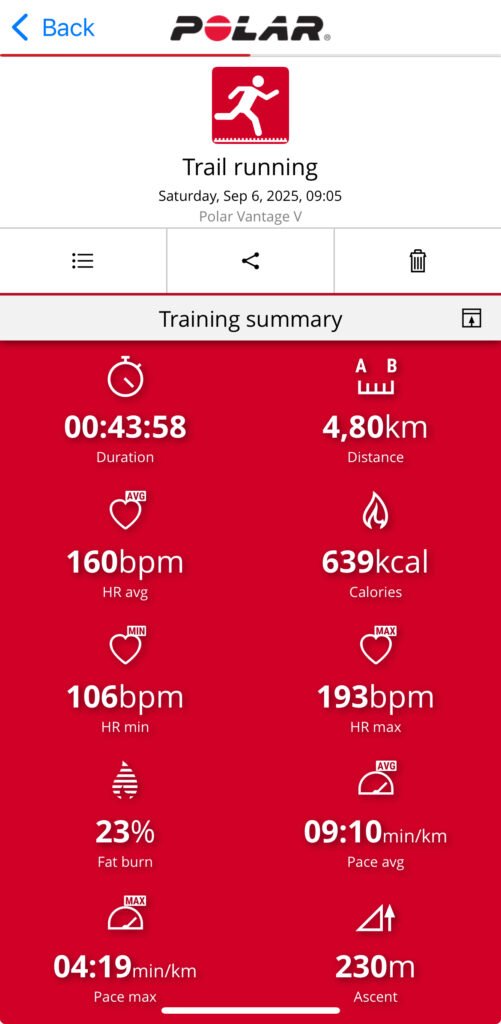
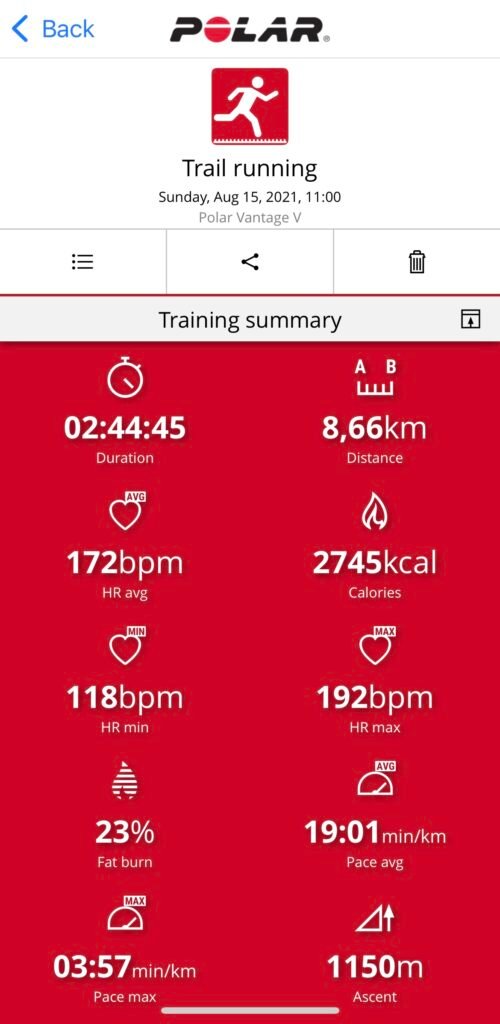
193 bpm.
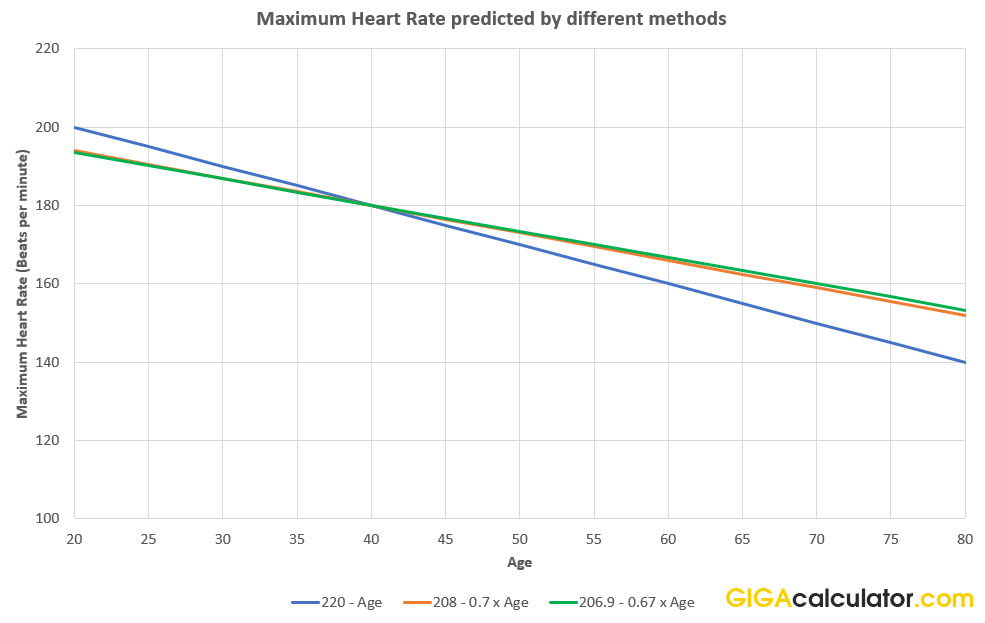
According to several physiological formulas, that puts my biological age somewhere between 21 and 27.
Which is funny because…
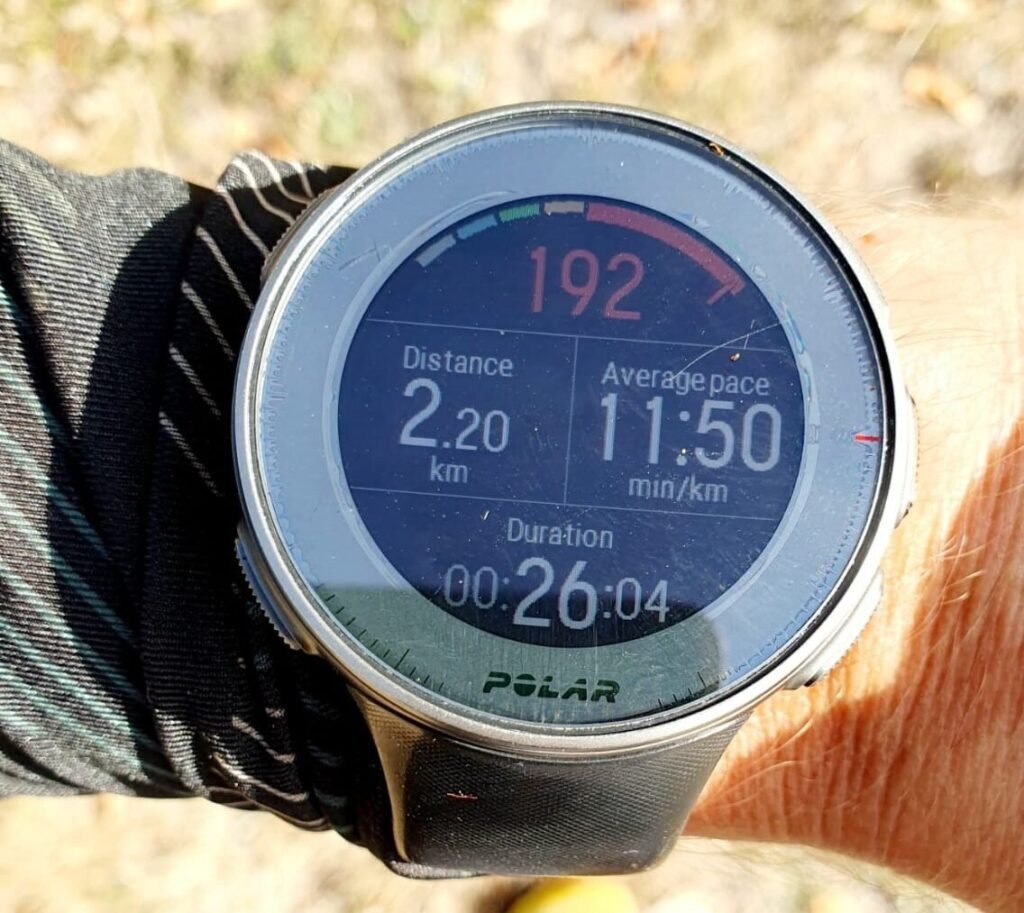
In 2020 my HR max was 192.
So technically…
I’m getting younger.
Here’s the strange part.
I’m actually training less than before.
Much less.
In fact, this year I slowed down significantly after crashing my bike and fracturing my skull slightly.
Not exactly a performance strategy I recommend.
Today my routine looks surprisingly simple:
• 15–40 minutes of yoga – more or less daily
• 2 minutes skipping rope – once a day when I feel that I sit at my desk too long
• 5-10 min TRX before yoga
• Trail Runs 2-3 times per week 5-10 km per run, substituted with Via Ferrata climbing when it is above + 15 C outside.
My previous routine was a bit heavier, until I found my method:
• 60+ km cycling rides once a week
• karate twice per week
• trail running every other day, out of that half 21 km or full marathons 42 km, at least once per month
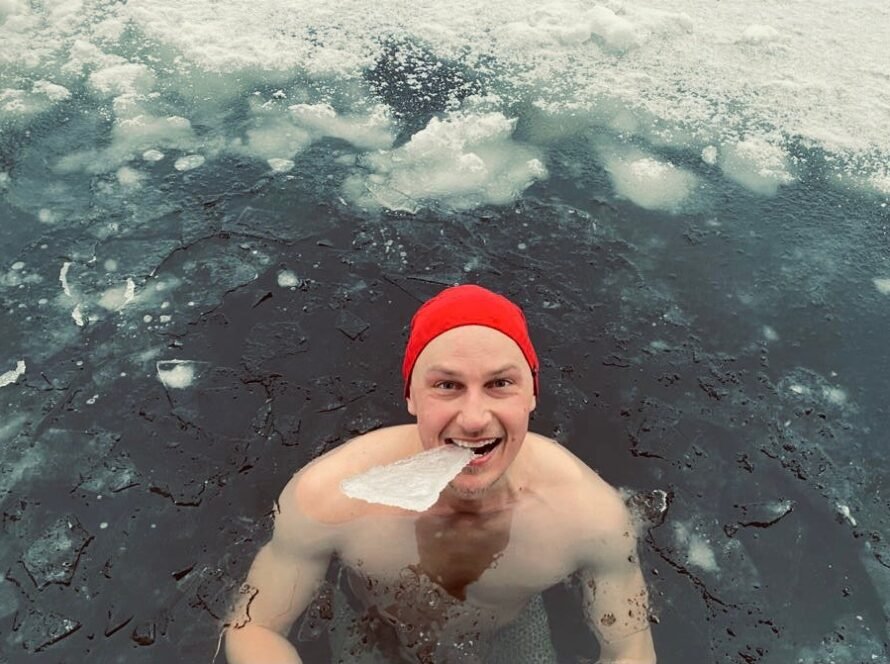
• open water swims / ice baths – at least once per week.
Constant pushing.
Constant optimisation.
So why am I now in the best shape of my life?
The answer surprised me.
I stopped commanding my body.
And started listening to it.
In the past my mindset was simple:
Push harder.
One more mile.
One more rep.
And the body usually obeyed.
Until it didn’t.
Then something changed.
Instead of pushing…
I started asking my body what it actually needed.
More rest?
More movement?
More breathing?
More nature?
The signals were always there.
I just wasn’t listening.
I wrote about interoception before, it’s your brain’s ability to sense signals from inside the body.
Elite performers rely on it heavily.
And mindfulness research shows it improves performance, decision-making and emotional regulation.
Even sports companies are starting to promote this idea.
Polar recently published an article suggesting something unexpected.
They recommend covering your smartwatch with a sleeve during runs.
Why?
So you stop obsessing over numbers…
…and start paying attention to your body.
Something interesting happens when you do that.
At first you notice the environment.
Trees.
Wind.
Sounds.
After a while something else happens.
You enter a flow state.
Psychologist Mihaly Csikszentmihalyi described it as the state where:
“People are so involved in an activity that nothing else seems to matter.”
For me that usually appears around 15–20 km into a run.
Breathing becomes steady.
The mind becomes quiet.
The body moves automatically.
It feels like watching yourself run from above.
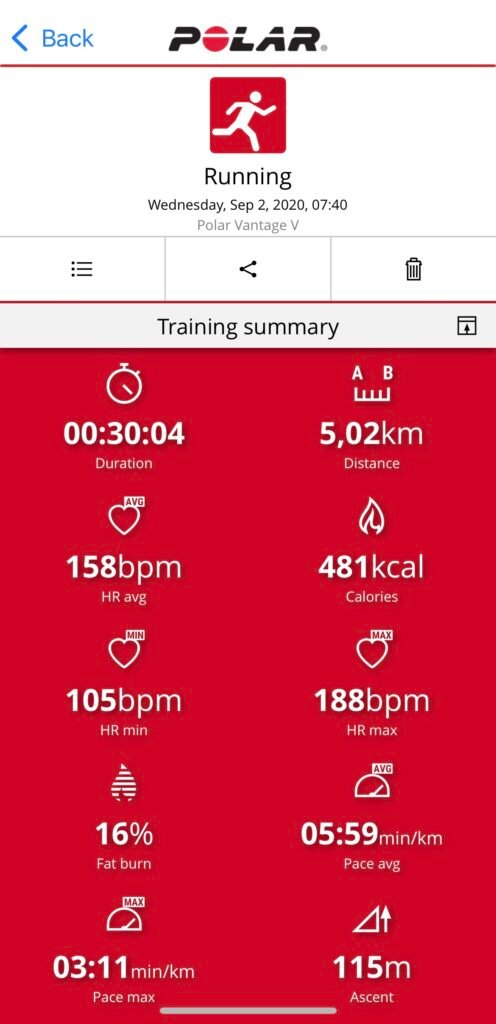
At the same time, my life outside training also changed.
We deliberately chose to live in the countryside, close to mountains.
Less noise.
Less pollution.
More silence.
I started treating stress the same way I treat weeds in my garden.
Pull it out with the roots.
Our home became a sanctuary.
Our food became simpler:
• organic vegetables
• fruits
• grains
• some fish
• eggs
• goat cheese
We avoid gluten and sugar most of the time.
But here’s an important rule.
Enjoy the pizza when you eat it.
Because stressing about food is worse than the food itself.

The biggest change though was mental.
Learning to stay present.
Not obsessing about the past.
It’s gone.
Not worrying too much about the distant future.
It may never come.
Life happens in the present moment.
And the quality of our lives depends on the choices we make there.
After five years of testing performance…
I discovered something simple.
Peak performance is not always about doing more.
Sometimes it’s about listening better.
With love for life,
Audrius